Frequently Asked Questions
The most-asked questions about anthropologists and archaeologists.
What is anthropology, and how does it relate to archaeology?
Anthropology is the broad academic study of human beings across all times and places, encompassing culture, biology, language, and society. Archaeology is one of its four core subfields, specializing in reconstructing past human life through material remains such as tools, architecture, and food residues.
Who are the foundational figures most often cited in the field?
Franz Boas is widely regarded as the father of modern American anthropology for championing cultural relativism and the four-field model, while Lewis Henry Morgan and E. B. Tylor shaped earlier evolutionary frameworks. In archaeology, Sir Flinders Petrie is celebrated for systematizing excavation methods, and Howard Carter is remembered for opening Tutankhamun's tomb in 1922.
Where should a newcomer start if they want to get into the subject?
A general survey course or a well-reviewed introductory textbook that walks through all four subfields gives the best big-picture orientation. From there, narrowing focus to a region, era, or method—say, Bronze Age metallurgy or Pacific Islander ethnography—turns casual curiosity into deeper study.
What are the four subfields that make up anthropology?
Cultural (social) anthropology, biological (physical) anthropology, linguistic anthropology, and archaeology together form the discipline. Each examines a different dimension of the human experience, from kinship and ritual to fossil hominins to grammar systems to buried settlements.
What is considered one of the most iconic discovery moments in the field's history?
The 1924 unearthing of the Taung Child skull in South Africa, which revealed a previously unknown australopithecine species, is frequently cited as a watershed for human-evolution research. On the archaeological side, the 1922 opening of Tutankhamun's largely intact tomb by Howard Carter remains one of the most publicly celebrated events to date.
What does a typical day look like for a working archaeologist?
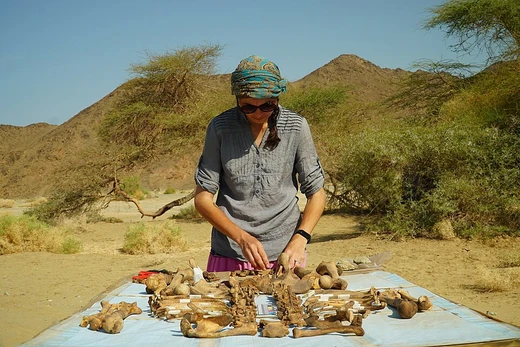
Fieldwork often means kneeling in a trench with a trowel and brush, logging the exact depth and coordinates of every artifact before it is lifted. Back in the lab, the same person might be sorting pottery sherds, reading thin-sections under a microscope, or running radiocarbon dates to pin down a site's chronology.
What is cultural relativism, and why is it so central to the discipline?
Cultural relativism holds that a society's practices should be understood within their own context rather than ranked against the observer's standards. It became a cornerstone after Franz Boas pushed back against nineteenth-century racial hierarchies and rigid 'stages of civilization' narratives.
What are some of the biggest ongoing debates in the field today?
The repatriation of ancestral remains and sacred objects to descendant communities is one of the most charged contemporary issues, pitting long-standing museum collections against indigenous rights. Another persistent tension concerns how much explanatory weight to give biological versus cultural factors in accounting for human behavioral variation.
What makes certain sites or finds become world-famous in the public imagination?
Places like Pompeii, Göbekli Tepe, and the Lascaux caves tend to capture wide attention because they offer vivid, almost cinematic windows into lives thousands of years ago. Their fame is often amplified by dramatic circumstances of discovery, unusual preservation, or the sheer scale of what was revealed.
How do anthropologists and archaeologists actually collaborate in practice?
Archaeologists routinely hand skeletal material to biological anthropologists for age, sex, and health analysis, and consult linguistic specialists when inscriptions or oral traditions are tied to a site. Conversely, ethnographers working with living communities often draw on archaeological evidence to add historical depth to their understanding of local identity and land use.